

Microsoft needs to prove it's serious about Cortana — before it's too late
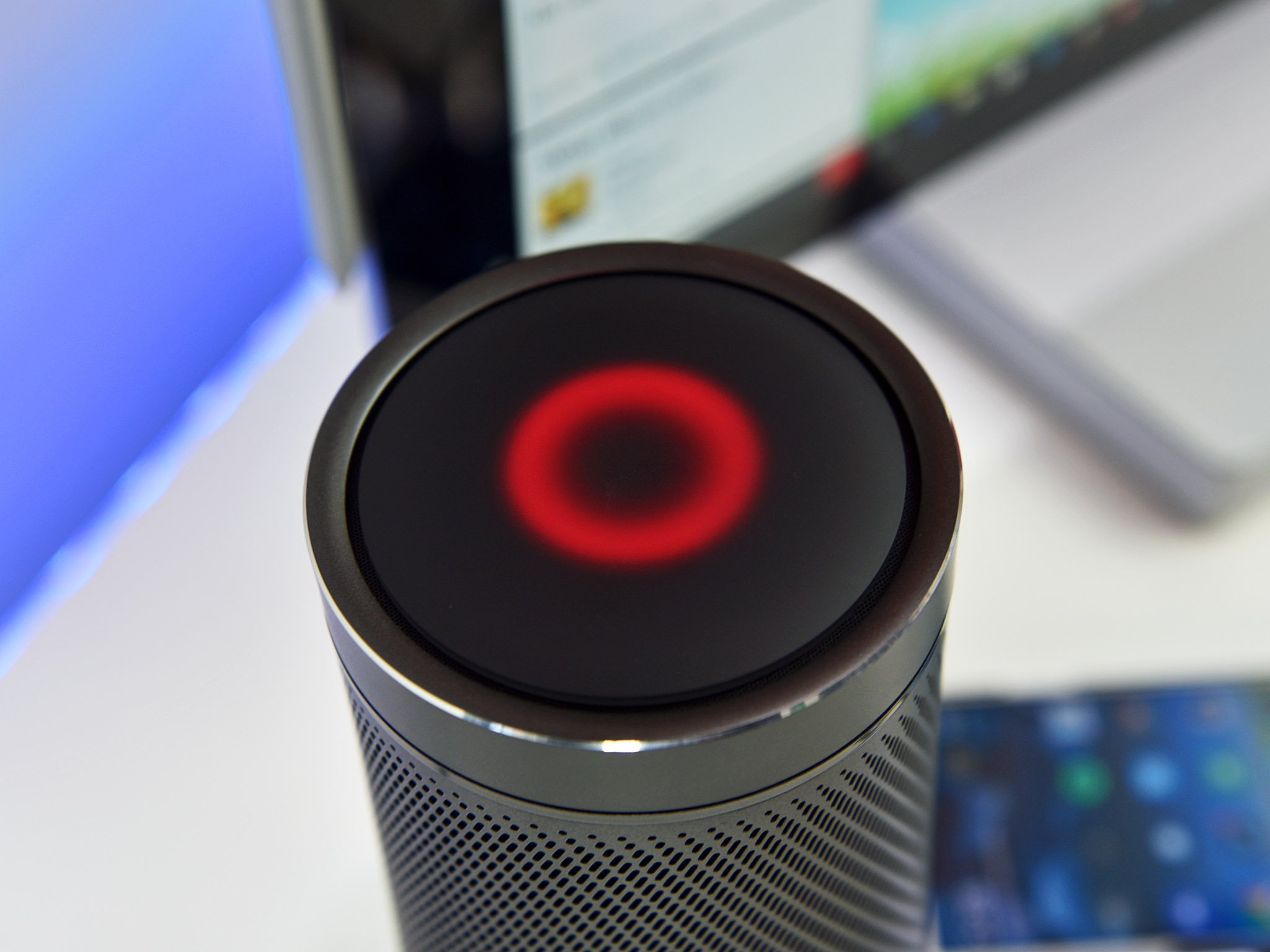
Once upon a fourth dimension, Cortana was going to revolutionize productivity and arrangement for every user of the Microsoft ecosystem. On PCs and Windows phones, "she" would assist yous fix up reminders, keep runway of your appointments, and dynamically let you know if you need a raincoat for that morning commute. On Xbox, Cortana would exist your gateway to voice-activated media controls and keep runway of your friends' activities on Xbox Live. On IoT, Cortana was supposed to arrive on a new generation of connected devices. So uh, how did this all become downward? Not as planned.
Microsoft says it's yet committed to Cortana, attempting to finish speculative commentary that portents the voice banana'south doom. But actions speak louder than words, and at least on the confront of it, Microsoft has been doing a whole load of nothing to showcase and develop Cortana as a platform.
Hey Cortana, install Alexa

While most of the features described above arrived, they either did so slowly, in a about-useless land, or, in some cases, not at all. That's specially so if you were in the wrong market. Cortana is in a weird, scary identify right at present, and information technology doesn't feel like Microsoft is giving the web-based Bing banana anywhere virtually the level of resources she needs.
Amazon's Alexa, with an army of cheap and powerful connected speakers, has thoroughly come up to dominate the whole idea of what a vox-activated assistant should be. Simply even Alexa has her disadvantages, in that she'south more or less express to that speaker in the corner of your house.
Cortana should have been well placed to take a dominating role in this new category.
Luckily for Cortana, Alexa's apps on Android and iOS aren't that great, all the same. Then, on a broad array of Microsoft-backed devices and hundreds of millions of PCs, Cortana should take been well placed to really have a dominating part in this heady and new category. Just it hasn't panned out that manner.
Amazon'southward Alexa is now encroaching on Windows PCs. Appear at CES, Amazon Alexa volition now come bundled with diverse PCs from high-profile vendors, such as ASUS and HP, which can only be seen as a snub of Microsoft's own voice-assistive efforts. Microsoft likewise previously appear that Alexa skills would be broiled straight into Cortana, a partnership spawned from a position of weakness, rather than strength. If Cortana was powerful enough, intuitive enough, and had the same level of developer support as Alexa, this "partnership" probably wouldn't be happening.

The whole idea of saying "Hey Cortana, open Alexa," earlier accessing Amazon's own services is ridiculous, specially when Alexa volition be getting direct-access apps on Windows PCs. Anything Cortana does, Alexa tin do better, and when she arrives on Microsoft's own platform, you lot have to presume that Cortana'due south days are well and truly numbered.
Cortana isn't a global product
Many of the complaints I accept most Cortana extend directly to her insular nature. If you're based in the U.S., your experience with Cortana will wildly differ from my own, being in the UK, where half of Cortana's services and capabilities aren't available. Of class, I'one thousand lucky to fifty-fifty take Cortana, considering she isn't available in the vast majority of territories and markets effectually the world. For a visitor as huge as Microsoft, this is just insane.
The trickle of IoT devices that support Cortana, such as the gorgeous GLAS thermostat, and Harman Kardon's surprisingly capable Invoke speaker are far from the regular army of devices Microsoft promised years ago for Cortana's IoT futurity. And these devices are available only in the U.S., as usual.
 The GLAS thermostat is a stunning example of what is possible with Cortana.
If you're a hardware manufacturer or developer looking to build services that necktie into a home automation platform, do y'all choose Cortana, which has no dedicated devices, or Amazon Echo, which just rolled out to 80 countries? That'due south an like shooting fish in a barrel respond.
Where is the global flagship Cortana device?
Relieve for a small handful of PCs with far-field microphone tech, yelling into your laptop's microphone is an utterly frustrating experience, and it pales in comparing to a dedicated microphone array, as seen with Amazon's Echo speakers or even Microsoft's own, at present expressionless, Kinect sensor. Where is the global flagship Cortana device?
Alexa, and other products, such as Google Home, accept their own growing pains in not-United states of america countries for sure, but at least Alexa already has far more capabilities in her master territories and can be used adequately in dozens of other countries providing you speak 1 of her languages. Microsoft's alibi for the lack of Cortana back up in other countries has often been to arraign localization issues, simply as a Brit, there is literally no downside to using Cortana set to a U.Southward. linguistic communication. Cortana's features just work when you switch her language, just Microsoft asks you to put upward with the annoying inconveniences that can arise from having your device location separated from your OS location for the privilege.
Get real or go out
 Cortana used to have music recognition, just Microsoft killed information technology off too.
Cortana is starting to expect like it could be the next big Microsoft consumer product to be thrown on the scrap heap, post-obit Groove Music, Windows 10 Mobile, and various other legacy products.. Cortana is a piddling different, though, in the sense that she is merely a portal to Microsoft's Bing search engine, which has enjoyed market share growth.
Why continue a expressionless characteristic baked into Windows itself, though? Cortana hasn't received a meaningful update in what feels like years at this point. The Cortana push button in my taskbar feels like a useless, vestigial limb. Cortana on Xbox is miserably inadequate. Cortana is clunky, slow, and with Kinect sales now killed off, literally unusable for new Xbox owners. The whole fiasco is just embarrassing.
In a recent editorial, our Executive Editor Daniel Rubino outlined his view that Microsoft is working towards a grander, more focused vision, where products are more finely curated before being pushed out to consumers.
The idea of relying on Microsoft services for personal calculating is becoming less tenable.
Groove, Microsoft Band, and Windows Phone are all products that, in Rubino'southward view, represented the quondam Microsoft, whose notorious silo-way workspace led to a litany of one-half-baked products that were either broken or only too tardily to market. Which side of the fence does Cortana lie on? At this point, it's hard to tell.
What is the deal hither, Microsoft? Is Cortana next on the chopping cake? Or practise you still have plans to improve her? You need to answer that question sooner than afterwards because it looks similar the era of the smart assistant is nigh to get yet another major computing market you guys missed out on.
There'southward a wider argument to tap into hither, merely Cortana represents a unmarried facet of a pervasive problem where, as a core user, it's starting to feel like the very thought of relying on Microsoft services and systems for personal computing is becoming less and less tenable. Cortana could become another reason for Microsoft users to leap to another ecosystem and never look back.
- Microsoft promises more Cortana devices for 2022
- Microsoft and its "let the past die" strategy

Nighttime thrills
Dying Calorie-free 2 review: Going quietly into the dark
Dying Light 2 is an admirable effort from Techland, following up the original game seven years later. Loftier-stakes nighttime play elevates what might have otherwise been a fairly forgettable open-globe zombie flick, which will likely find itself a fond identify amidst fans of games with co-op sandbox mayhem.

Source: https://www.windowscentral.com/microsoft-get-serious-about-cortana-or-give
Posted by: masonworeirsis.blogspot.com
0 Response to "Microsoft needs to prove it's serious about Cortana — before it's too late"
Post a Comment